
Daylio Review
The two-tap mood journal that makes daily tracking so fast you actually keep doing it.
Our rating
4.6 / 5
Starting price
Free, then ~$35.99/yr
Free tier
Yes
Platforms
iOS · Android
Developer
Relamic / Daylio
Launched
2015
Our verdict
Daylio is the best mood tracker for one simple reason: logging takes two taps, so you actually stick with it. Pick a mood, tag activities, done. Over weeks it surfaces real correlations between what you do and how you feel. It is light on guidance, but as a pure tracker it is close to perfect.
This review is editorial and unsponsored, no affiliate payments influence our ratings. Selfpause makes a wellness app of its own, so where a product competes with us, we say so plainly and let you judge.
Daylio solved the core problem of mood tracking, that most people quit. Instead of asking you to write, it lets you log your day in seconds: tap a mood face, tap a few activity icons, and you are finished.
That speed is the whole point. A check-in that takes ten seconds survives busy days; a journal that demands paragraphs does not. Over time, Daylio turns those quick logs into charts, streaks, and correlations.
It functions, in effect, as a simplified CBT diary card, connecting mood to behavior so you can see patterns. It will not coach you through those patterns, but it shows them clearly, which is more than most apps manage.
What Daylio looks like


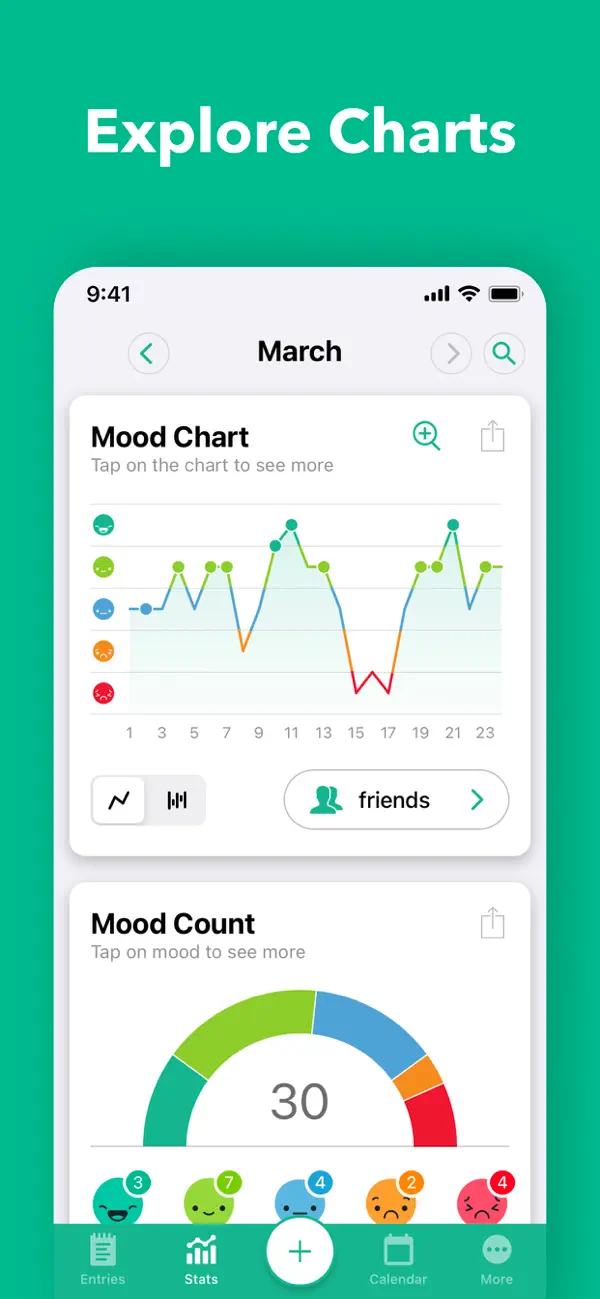
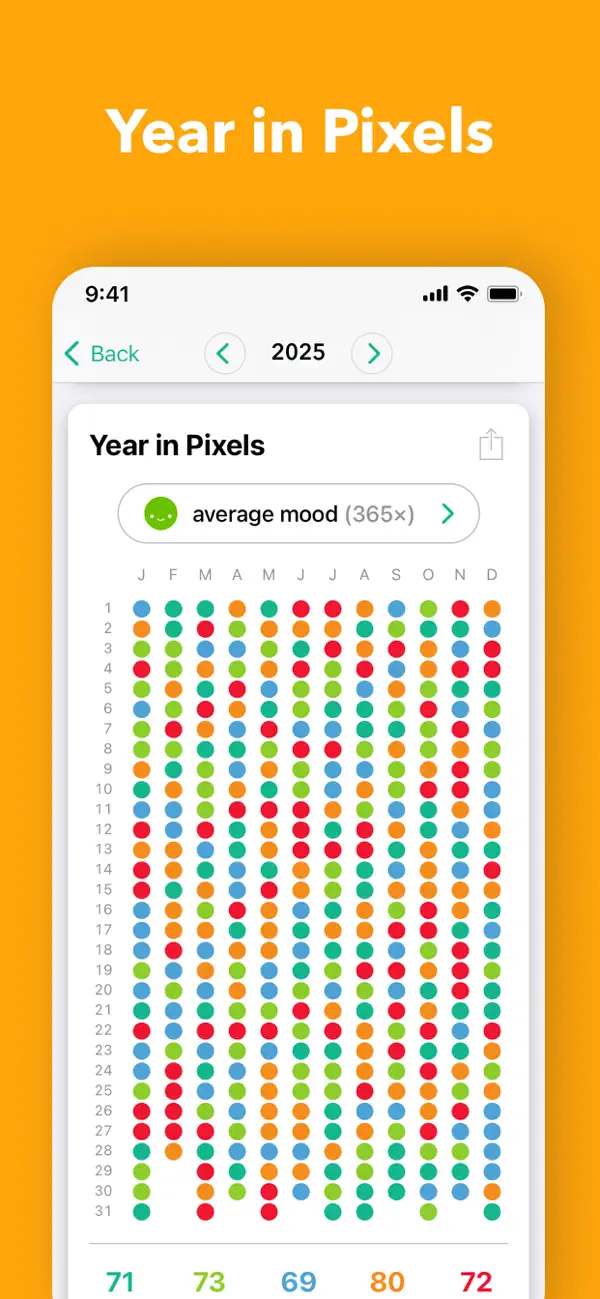
Screenshots from Daylio’s App Store listing, © Relamic / Daylio.
Pros & cons
What we like
- Two-tap logging makes daily tracking effortless and sustainable.
- Customizable moods and activity tags fit your real life.
- Genuinely useful stats and correlations between activities and mood.
- Streaks and reminders that keep the habit alive.
- Works fully offline and respects your privacy.
What we don’t
- It tracks; it does not guide, no CBT exercises or coaching.
- Insights are correlational, so read them thoughtfully, not as causation.
- Advanced stats, more tags, and backups need Premium.
- Less helpful if you want detailed symptom or health tracking.
Best for / avoid if
Best for
- →Anyone who has abandoned journaling because it took too long
- →People who want to spot links between habits and mood
- →Therapy clients who want simple between-session data to share
- →Those who value a fast, private, offline tool
Avoid if
- →You want guided CBT exercises, not just tracking
- →You need detailed medical or symptom tracking, Bearable fits better
- →You want long-form journaling
Pricing
Free
$0
Core mood and activity logging with basic stats, very usable.
Premium
~$35.99/yr
Advanced stats, unlimited tags, color themes, and backups.
What Daylio is
Daylio is a mood-tracking and micro-journaling app. You log how you feel and what you did with a few taps; it builds charts and surfaces correlations over time.
It is a measurement tool, not a treatment. Its value is awareness, helping you see patterns you can then act on yourself or discuss with a professional.
Why two-tap logging changes everything
The reason most mood journals fail is friction. Daylio removes nearly all of it: the entire entry is tapping a face and a few icons, so the habit survives even on your worst, busiest days.
And consistency is what makes tracking useful. A month of effortless daily logs reveals far more than a week of detailed entries you then abandon.
Activity correlations
Daylio cross-references your moods with the activities you tag and shows which ones tend to accompany good or bad days.
Seeing, for instance, that your best days cluster around exercise and your worst around poor sleep can be quietly clarifying, it is a CBT-style diary card without the homework feel.
Streaks and reminders
Gentle reminders and a visible streak keep you logging.
It is simple behavioral design, and it works, the streak is often what carries the habit past the first couple of weeks.
Where Daylio falls behind
Guidance. It shows patterns but will not help you change them, pair it with therapy or a CBT app.
Causation. Correlations are suggestive, not proof; treat them as prompts to reflect.
Clinical detail. For symptoms, medication, and health factors, Bearable tracks more.
Daylio vs. Bearable vs. How We Feel
Daylio optimizes for speed, Bearable for detail, and How We Feel for emotional vocabulary. Daylio is the fastest to maintain; Bearable tracks far more variables; How We Feel teaches you to name feelings precisely.
If you want a habit you will actually keep, Daylio wins. If you are managing a health condition with many variables, Bearable is worth the extra effort. If your goal is emotional literacy, try How We Feel.
For most people simply wanting to understand their moods, Daylio is the right first choice.
Bottom line
Daylio is the best pure mood tracker because it is the one you will actually keep using. For guided change pair it with therapy or a CBT app; for detailed health tracking consider Bearable. As an awareness tool, it is excellent.
Want a daily positivity practice in your own voice? Selfpause lets you record personalized affirmations, layer them with calming music, and keep them on your lock screen.
Try Selfpause FreeAlternatives to Daylio

How We Feel
4.5Free, beautifully designed, focused on naming emotions.
Read our review →

Finch
4.7Gamified self-care that includes mood check-ins.
Read our review →
Frequently asked questions
Is Daylio free?+
Yes, the free version covers mood and activity logging with basic stats and is very usable. Premium adds advanced stats, unlimited tags, and backups.
Can Daylio help with depression or anxiety?+
It can build self-awareness and is useful to share with a therapist, but it is a tracker, not treatment. For a diagnosed condition, work with a professional.
Daylio or Bearable?+
Daylio for fast, sustainable mood tracking; Bearable for detailed tracking of symptoms, sleep, medication, and health factors.
Does Daylio work offline?+
Yes. It works fully offline and keeps your data private, which many users specifically value.
A note on mental health: apps and online services can support wellbeing, but they are not a substitute for professional care. If you are struggling, a licensed professional can help, and if you are in crisis, contact your local emergency number or, in the US, call or text 988 (Suicide & Crisis Lifeline).
More mood trackers reviews
How We Feel
4.5A beautifully designed, completely free mood tracker built to expand your emotional vocabulary.

Bearable
4.4The tracker for complicated bodies and minds, mood, symptoms, meds, sleep, and habits in one correlated picture.

Stoic
4.2A journaling app with a worldview, morning preparation, evening review, and two thousand years of Stoic practice.